The Classroom of Tomorrow: How Artificial Intelligence Is Revolutionizing Education Today
Imagine a classroom where every student receives instruction tailored precisely to their pace, learning style, and knowledge gaps — in real time, without overburdening a single teacher. This is not a distant utopia. It is the educational reality that artificial intelligence is building right now.
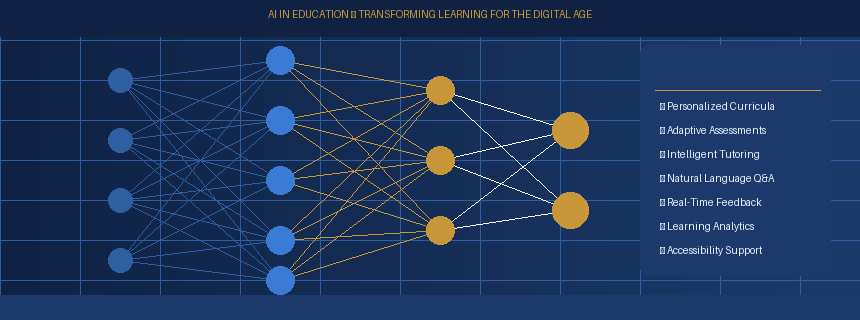
Figure 1: Neural network architecture representing AI-driven adaptive learning systems
The AI Revolution in Education: A Paradigm Shift
Education has always evolved in response to technological disruption. The printing press democratized knowledge in the fifteenth century. Radio and television extended the reach of instruction in the twenties. The internet broke down geographic barriers to learning in the 1990s and 2000s. But none of these transformations came close to the personalization, adaptability, and analytical depth that artificial intelligence now brings to the classroom.
AI in education encompasses a wide spectrum of applications: intelligent tutoring systems, natural language processing tools, automated grading platforms, predictive learning analytics, and generative AI assistants. Each of these technologies addresses longstanding challenges in education: teacher workload, learner disengagement, inequitable access, and the mismatch between standardized curricula and diverse learner needs.
According to a 2024 report by HolonIQ, global AI in education market is projected to exceed USD 30 billion by 2030, growing at a compound annual rate of over 38%.
Personalized Learning: Teaching Every Student Differently
One of the most transformative applications of AI in education is personalized learning — the ability of a system to adapt its content, pacing, and feedback to the individual needs of each learner. Traditional classroom instruction is inherently one-size-fits-all: a teacher delivers the same lesson at the same pace to students with vastly different prior knowledge, learning speeds, and cognitive styles.
AI dismantles this constraint entirely. Platforms such as Khan Academy’s Khanmigo, Duolingo’s adaptive engine, and Carnegie Learning’s MATHia use machine learning algorithms to continuously assess a student’s performance, identify misconceptions in real time, and adjust the difficulty and style of content accordingly.
Research published in the Journal of Educational Psychology (2023) found that students using AI-personalized platforms achieved 35% better learning outcomes compared to those in traditional instruction, with particularly pronounced gains among learners from disadvantaged backgrounds.
Intelligent Tutoring Systems and the New Role of the Teacher
Intelligent Tutoring Systems (ITS) represent one of the most extensively researched applications of AI in education. These systems use knowledge models of both the subject matter and the learner to provide step-by-step guidance, hints, and feedback — mimicking the interaction of a skilled human tutor, but available twenty-four hours a day, seven days a week.
The impact on teacher roles is profound — and often misunderstood. AI does not replace teachers; it augments them. By automating routine tasks such as grading multiple-choice assessments, tracking attendance, flagging at-risk students, and generating progress reports, AI frees educators to focus on what they do uniquely well: building relationships, facilitating critical discourse, nurturing creativity, and providing human mentorship that no algorithm can replicate.
Generative AI in Higher Education: Opportunities and Ethical Boundaries
The emergence of large language models has introduced a new dimension to AI in education, particularly at the tertiary level. These models can explain complex concepts in plain language, generate practice questions, provide feedback on written drafts, simulate debate partners, and assist researchers in summarizing vast bodies of literature.
However, the integration of generative AI in education demands careful ethical boundaries. Academic integrity remains non-negotiable: AI must be used as an assistive tool — to sharpen thinking, clarify understanding, and practice skills — never as a substitute for original intellectual work.
Key Takeaways
- AI enables genuine personalization at scale — adapting to every learner’s pace, style, and knowledge gaps.
- Intelligent Tutoring Systems provide round-the-clock, responsive academic support previously available only through private tutoring.
- AI augments teachers by automating routine tasks, freeing educators for higher-value human interaction.
- Generative AI offers powerful tools for research, practice, and learning — within clear ethical boundaries.
- The global EdTech AI market will exceed USD 30 billion by 2030, signaling transformational institutional change.
The Road Ahead: Challenges and Considerations
Despite its enormous promise, AI in education is not without legitimate challenges. Data privacy is a paramount concern: AI learning systems collect vast quantities of sensitive data about minors and young adults. Algorithmic bias presents a subtler but equally serious risk. And the digital divide remains a structural barrier — the transformative potential of AI in education is contingent on reliable internet access and device availability.
Conclusion
Tomorrow’s classroom will not look like the classroom of today. Walls will be less relevant than algorithms. Lesson plans will be less rigid than learner models. Assessment will be less about summative testing and more about continuous, nuanced feedback. But at the heart of this transformed educational landscape will still be human relationships — between teachers who inspire and students who aspire.
The measure of AI’s success in education is not whether machines can teach, but whether every human being — regardless of background, ability, or geography — can learn.