Sustainability Impact Ratings 2026: Sustainability ‘is in Asean universities’ DNA’
South-east Asian universities have played an outsized role in Times Higher Education’s Impact Rankings ever since their 2019 inception. This year is no exception, with the Association of Southeast Asian Nations (Asean) region providing 352 of the 1,650-odd entrants in the 2026 Sustainability Impact Ratings.
Over 300, some 20 per cent, were in Asean’s most populous countries – Indonesia, the Philippines, Vietnam and Thailand – which, by way of comparison, provided 4 per cent of the institutions listed in THE’s latest World University Rankings (WUR). Twenty-five Asean universities made the top 200 of the overall impact ranking, compared with none in the WUR.
The Philippines was better represented than any other nation, with 160 universities earning overall positions in the 2026 Sustainability Impact Ratings. By comparison, 48 Filipino institutions submitted data for the latest WUR and only six met the criteria for ranking, which include at least 1,000 refereed journal articles over five years.
Political scientist Alma Maria Salvador said many Filipino universities lacked the research output and “robust” quality assurance processes needed to achieve WUR ranking – although many entered anyway “for international benchmarking purposes”. But the absence of a “large research threshold” gave them an opportunity to “make our presence felt” in the impact ratings, which also played to their community service strengths.
“As universities in…a developing country, community service ranks equally with research and teaching,” said Salvador, coordinator for standards and accreditation in Ateneo de Manila University’s quality management office.
This was particularly the case with Ateneo, the University of the Philippines and De La Salle University, which had played a part in the country’s democratisation movement since the 1970s. This had included combating “state cronyism” by, for instance, monitoring illegal fishing.
Such activities remained as important as ever today, albeit more oriented around biodiversity. “With or without the impact rankings, we would be doing what we’re doing,” Salvador said. “It’s part of our mission.”
Top 10 universities in the Asean region in the overall Sustainability Impact Ratings 2026
= joint
Chulalongkorn University in Thailand ranked 19th overall in this year’s impact ratings. “In a developing economy, being a top university is meaningless if we aren’t helping the country escape the middle-income trap or manage urban resilience in Bangkok,” said Thantrira Porntaveetus, associate dean for research and innovation in Chulalongkorn’s Faculty of Dentistry.
Asean universities’ sustainability-related work is “battle-tested” on the “front lines” of climate change and rapid urbanisation, she said. “We excel in frugal innovation – finding high-impact, low-cost solutions for community resilience.”
Porntaveetus said the metrics underpinning traditional rankings tended to favour “historical wealth and the English-language academic ecosystem”, while overlooking universities’ carbon footprints and support for low-income students. The sustainable development goals (SDGs) captured such efforts while helping guide curriculum development and research.
“Before the Impact Rankings, our sustainability data was scattered. The ranking forced us to centralise data – tracking water usage, waste management and the percentage of first-generation students.”
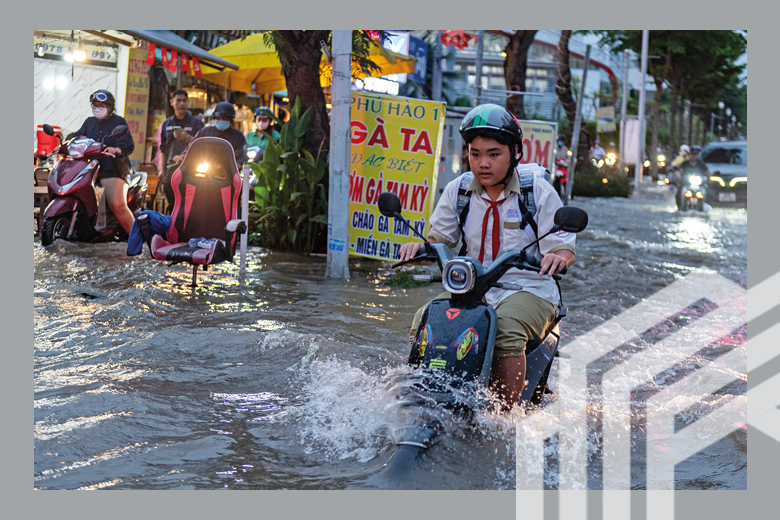
Like Chulalongkorn, the University of Economics Ho Chi Minh City (UEH) is its country’s top performer in both the WUR and the impact ratings. Transport engineer Trinh Tú Anh said climate change, waste management and social inequality were not “abstract topics” in Vietnam. “They are very real, very immediate,” said Trinh, director of UEH’s Institute of Smart City and Management.
Source:
Thanh Hue/Getty Images
She said the impact ratings measured more than research income and citations. “They also ask how the university works with its community…how it contributes to sustainability and connects the learning with the social value. That is a very important thing, because it reflects the real mission of many universities in Asean today.”
Universiti Kebangsaan Malaysia (UKM), which ranked joint seventh overall in the impact ratings, said Asean universities’ outsized performance against SDG metrics was “not incidental. Their institutional DNA is fundamentally aligned with sustainability, societal impact and national development priorities,” said Lim Kar Keng, deputy executive director of performance and rating.
“The SDGs are not just a reference framework; they are a primary driver of teaching and research direction.”
UKM’s Sustainability Policy 2030 has “embedded” SDG principles into the university’s governance, curriculum, research and community engagement, Lim said. “The SDGs do not merely guide priorities – they define them.”
john.ross@timeshighereducation.com