Contextuality in Architecture: Insights from the Diverse Landscapes of India
Explore how contextual architecture in India blends culture, climate, and sustainability to inspire design thinking at Gulf University.
Architecture, at its core, is not an isolated act of creation, rather it is a response. A response to climate, culture, history, people, material, memory, and the stories of everyday life. This idea, often described as contextuality, reminds us that buildings do not exist in a vacuum; they belong to a place. In India, architecture unfolds as a tapestry of regional identities shaped by geography, climate, tradition, and time. Exploring India as an architect is like reading a living atlas of contextual design. Each region and state tells a different story through color, texture, spatial organization, and construction.
Northern India: Grandeur Meets Environmental Pragmatism

Fig 1. Examples of Architecture in North India
Here, climate guides architecture and space planning. In northern India, where temperatures swing from scorching summers to cold winters, architecture balances grandeur with environmental pragmatism. Think of thick stone or brick walls, internal courtyards, and intricate jaalis (perforated screens) that filter light and air. The palette here often leans toward earthy reds, warm ochres, and sandstone hues, materials sourced locally and used both structurally and ornamentally. Mughal and Rajput influences bring symmetry, domes, arches, and axial planning into prominence. These buildings are not just visually imposing, they are carefully calibrated to regulate heat and create microclimates.
Western India: Survival Within Arid Landscapes
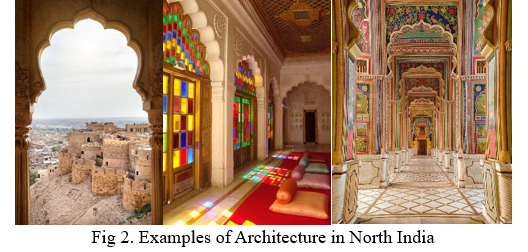
Fig 2. Examples of Architecture in Western India
When exploring the western regions such as Rajasthan and Gujarat, the architecture becomes a masterclass in survival within arid landscapes. Settlements here are compact, minimizing exposure to harsh sun and sand-laden winds. Materials like sandstone and mud dominate, often finished in golden-yellow or muted beige tones that mirror the desert itself. Buildings feature small openings, deeply recessed windows, and elaborately carved facades. In towns like Jaisalmer, entire cityscapes appear sculpted from a single material, glowing under the desert sun. Stepwells (baolis) emerge as both infrastructural and architectural marvels, monumental responses to water scarcity, combining utility with intricate geometry.
South India: Ritual, Monsoons, and Vibrant Tradition
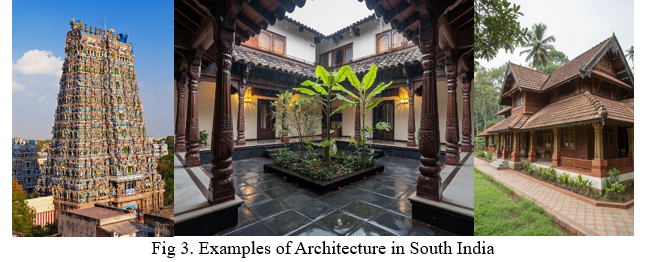
Fig 3. Examples of Architecture in South India
Interestingly, South India introduces a different rhythm that incorporates lush landscapes, heavy monsoons, and a long-standing temple tradition. Here, architecture is deeply tied to ritual and cosmology. Dravidian temples, with their towering gopurams (gateway towers), are painted in vibrant hues such as turquoise, coral, lime green, and deep blue thus creating a striking contrast against the sky. Residential architecture, particularly in Kerala and Tamil Nadu, emphasizes sloped roofs with clay tiles, deep verandas, and timber construction to handle heavy rainfall. The use of courtyards (Nalukettu houses in Kerala) allows for ventilation and diffused light, while also serving as the emotional heart of the home. Materials include wood, laterite stone, lime plaster aging gracefully in humid conditions.
North-Eastern Regions: Harmony with Landscape
On the other hand, North-Eastern regions, including Bengal and Assam, reflects a softer, more fluid architectural language shaped by rivers, rainfall, and fertile plains. Structures here traditionally use bamboo, thatch, and mud, materials that are renewable and adaptable to flooding conditions. Roofs are curved or sloped to quickly shed rain, and buildings are often raised on plinths. Color palettes tend to be subtle whites, soft pastels, and natural tones punctuated by artistic expressions like alpana (floor art) or terracotta ornamentation. The emphasis is less on monumentality and more on harmony with landscape and craft traditions. In the northeastern states, architecture becomes even more intimately tied to ecology. Elevated bamboo houses on stilts respond to flooding and wildlife, while lightweight construction ensures resilience during earthquakes. The aesthetic is minimal yet expressive including woven textures, natural finishes, and a close relationship between indoors and outdoors. Here, contextuality is not a design strategy; it is a way of life passed down through generations. Similarly, Central India offers a rich blend of temple architecture and rural architecture, where storytelling becomes embedded in walls and surfaces. Mud houses adorned with hand-painted motifs, geometric patterns, and symbolic art reflect cultural identity. Colors are often bold reds, whites, blacks, and yellows derived from natural pigments. Construction techniques are simple yet effective, relying on locally available materials and communal knowledge.
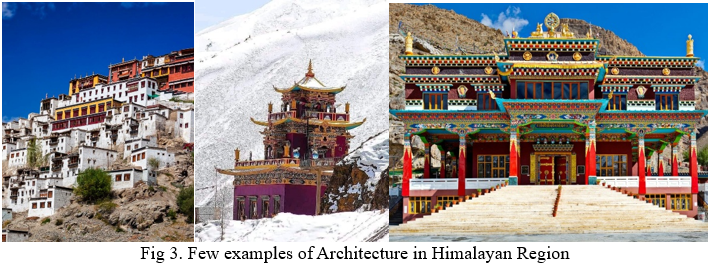
Fig 4. Examples of Architecture in Himalayan Region
Lessons from India’s Diverse Landscapes
What the diverse landscapes of India teaches us, above all, is that architecture rooted in context is inherently sustainable, expressive, and enduring. These buildings are not designed to relate to buildings around the globe rather they are designed to belong to their context. In contemporary practice, where globalization often leads to homogenization, revisiting contextual principles becomes crucial. It is not about replicating traditional forms, but about understanding the forces that shaped them: climate, culture, resource availability, and human behavior. To design contextually is to listen to the land, understand the emotions and stories of its people, and the history of the land. And perhaps, in that listening, architecture regains its most essential purpose: creating spaces that feel inevitable, as though they could exist nowhere else.
Conclusion
Architecture, when rooted in context, becomes more than just built form—it becomes a reflection of identity, environment, and human experience. The diverse landscapes of India demonstrate how design can respond intelligently to climate, culture, and available resources, creating spaces that are both functional and deeply meaningful.
As highlighted in the discussion, contextuality is not about replicating tradition but understanding the forces that shape it. From the desert settlements of Rajasthan to the monsoon-responsive homes of Kerala, each architectural response offers valuable lessons in sustainability, adaptability, and cultural expression.
At Gulf University, these insights reinforce the importance of teaching future Interior Design Engineers to design with sensitivity and awareness. In a world increasingly shaped by globalization, contextual design serves as a reminder that meaningful architecture must belong to its place—environmentally, culturally, and socially.
Ultimately, the future of architecture lies in balancing innovation with context. By listening to the land, respecting local narratives, and embracing diversity, architects can create spaces that are not only sustainable but also timeless and authentic.
Design with purpose—embrace contextual thinking to create architecture that truly connects with people, place, and environment.
Contextual ArchitectureSustainable DesignIndian ArchitectureArchitectural DiversityGulf University
SJ
Ms. Sandra Job
Gulf University